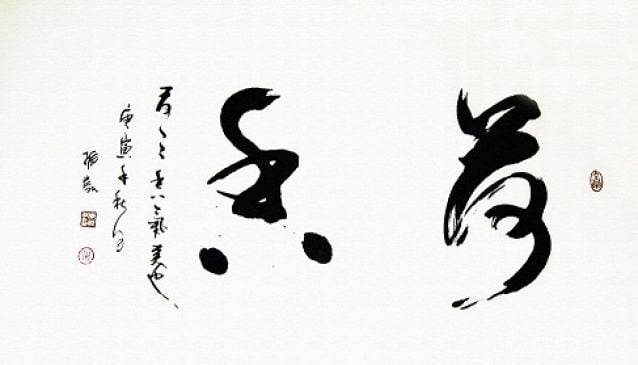
Art of Chinese Calligraphy
Chinese calligraphy, or shufa, is boasting as long a history as that of China itself.
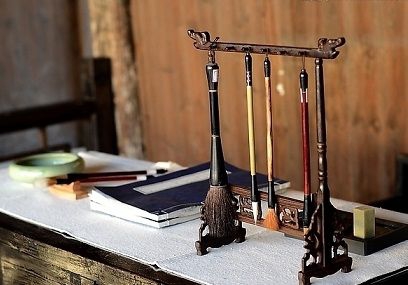
As the art of Chinese calligraphy, or shufa, is boasting as long a history as that of China itself. It is one of the highest forms of Chinese art, serving the purpose of conveying thoughts while also showcasing abstract beauty of lines. Calligraphy (shÅ« fÇ ä¹¦æ³) has traditionally been regarded as China's highest form of visual art - to the point that a person's character was judged by the elegance of their handwriting! The basic tools of calligraphy - brush and ink - are also the tools of Chinese painting, with line work and tone the all-important components.
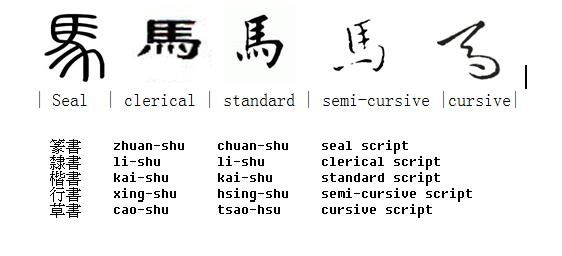
The story of the development of Chinese characters is not a very simple and coherent one. Different types of characters and styles were accepted at different places, under different rules and at different times. The intriguing thing is that some masterpieces that introduced a new revolutionary style were so admired that they were established as the new standard and form to be copied and studied by later generations. In general Chinese calligraphy can be divided into five major styles: Zhuan Shu (ç¯ä¹¦) today mostly confined to seal carving, Li Shu (é¶ä¹¦), the traditional official style (mainly dominant during the Han Dynasty 206 B.C.-220 A.D), Kai Shu (楷书), the most common form for printing which is also considered to be the standard form of writing Chinese, Xing Shu (è¡ä¹¦), the most commonly used form of hand writing also known as 'running style' and finally Cao Shu (è书), the Chinese cursive style, mostly used by calligraphers for highly abstract works but also seen in everyday use.
Take the word ‘horse’ for example.